The Day Everything Changes: Inside the Physical Therapy Assistant Certification Course That’s Rewriting Healthcare Careers
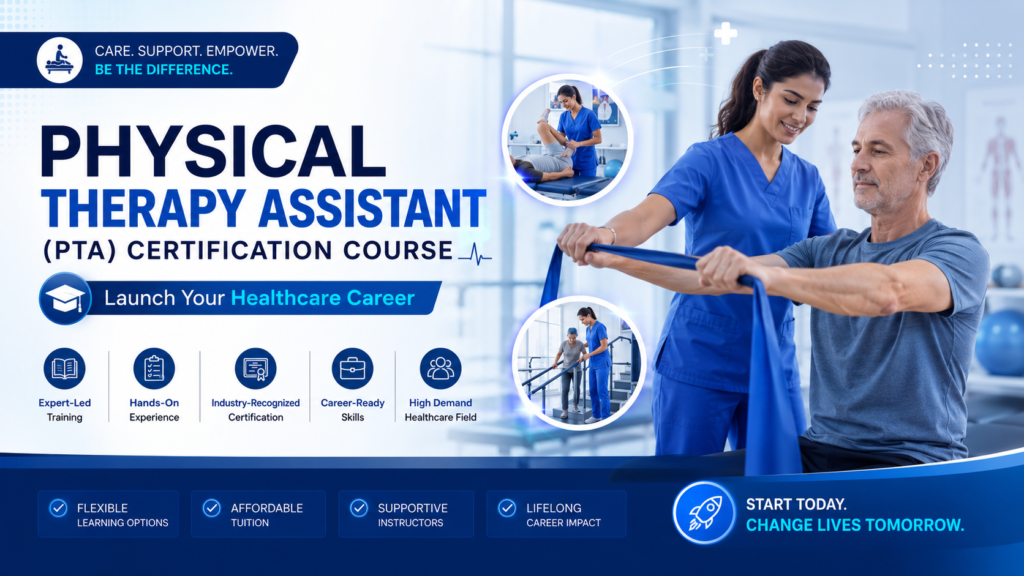
It’s 6:47 AM. Your alarm hasn’t even gone off, yet you’re already awake, wondering whether your current job is really what you want to do for the next thirty years. Perhaps you’ve been asking yourself the same question for months: Is there a more meaningful career waiting for me? Physical Therapy
Meanwhile, somewhere in a hospital across town, a physical therapy assistant is beginning their shift. They’re supporting a stroke survivor taking their first steps after weeks of rehabilitation. They’re helping an athlete prepare for a return to competition. Most importantly, they’re contributing to a grandmother’s recovery so she can walk her granddaughter down the aisle with greater independence.
That could be you. And with the right preparation, you can begin exploring this rewarding profession today through the online training programs offered by London HeartbeatZ Academy.
Rather than another generic course promising vague career growth, this program offers a structured introduction to physical therapy and rehabilitation. Through its clinical topics, practical video lectures, and career-focused content, you’ll discover what the profession involves and how to prepare for further learning.
So, let’s explore what this course offers, who can benefit from it, and how it could support your next career move.
Act One: Discover the Physical Therapy Assistant Career
Here’s something many aspiring healthcare professionals discover only after experiencing rehabilitation firsthand: physical therapy assistants help people regain movement, improve function, and work toward greater independence.
For example, imagine recovering from an injury and watching a healthcare professional guide you through exercises that gradually restore your mobility. At that moment, you might wonder, Could I do this kind of work, too?
The answer starts with understanding the profession and its requirements.
Across healthcare settings, rehabilitation supports people recovering from surgery, managing chronic pain, living with neurological conditions, and rebuilding strength after injuries. Furthermore, aging populations and growing awareness of rehabilitation needs make this an important area of healthcare.
However, the responsibilities and career pathways of physical therapy assistants vary by country. In the United States, physical therapist assistants generally work under the direction and supervision of licensed physical therapists. In the United Kingdom, physiotherapy support roles have different titles, responsibilities, and qualification requirements.
Consequently, anyone considering this career should understand the regulations that apply in their intended country of employment.
Despite these differences, one principle remains consistent: rehabilitation requires knowledge, patience, communication, and compassion. Therefore, structured education can be a useful first step toward understanding the field and deciding whether it matches your professional goals.
That’s where the Physical Therapy Assistant Certification Course from London HeartbeatZ Academy comes in.
Act Two: What Makes This Physical Therapy Assistant Course Different?
Many online courses focus primarily on theoretical explanations. By contrast, this program combines foundational clinical subjects with rehabilitation topics, video lectures, and career-related learning.
According to the course description, the curriculum includes 20 in-depth modules and 26 practical video lectures. As a result, learners can explore a broad range of subjects through a structured, self-paced format.
Explore the Core Clinical Subjects
A strong understanding of the human body provides the foundation for rehabilitation. For this reason, the curriculum covers several essential areas:
Anatomy and Physiology: Understand the body’s structures, functions, and responses to injury.
Kinesiology: Explore how muscles, joints, and bones work together to produce movement.
Therapeutic Exercise: Learn about exercise principles used to support mobility, strength, flexibility, and functional recovery.
Electrotherapy Modalities: Discover the principles behind selected electrotherapy techniques used in rehabilitation settings.
Neurological and Cardiopulmonary Rehabilitation: Explore rehabilitation concepts relevant to neurological and heart or lung conditions.
Pain Management, Wound Care, and Pharmacology: Develop introductory knowledge of important topics encountered in healthcare.
In addition to these foundational subjects, the course introduces concepts that connect anatomy and physiology with rehabilitation practice. Therefore, you can begin developing a more integrated understanding of how the body moves, responds to injury, and recovers.
Explore Emerging and Specialist Topics
The curriculum also introduces subjects that extend beyond basic anatomy and exercise.
For instance, the course description highlights the following topics:
Why the Healthcare System Is Failing Physical Therapy: Examine challenges that can affect rehabilitation services and patient care.
The Truth About Taping Techniques: Explore the principles and applications of taping in clinical and sports settings.
Dry Needling Demystified: Learn about this specialist intervention, its intended applications, and its place in rehabilitation practice.
Emerging Technologies: Discover how new technologies are influencing rehabilitation assessment, treatment, and service delivery.
Moreover, these topics can help learners identify areas for further professional development. Nevertheless, studying them online does not authorize learners to perform restricted procedures or replace the supervised training required for clinical competence.
The course is also designed for flexible access through compatible devices. Consequently, you can study at a time that fits your schedule rather than following a fixed classroom timetable.
Act Three: A Curriculum Designed Around Your Learning Journey
The program is organized around several stages, beginning with foundational knowledge and progressing toward specialist topics and career preparation.
Section 1: Foundations and Clinical Essentials
First, explore how the human body functions and how different conditions can affect movement, strength, and recovery.
Key topics include:
The Human Body Decoded: Build an understanding of anatomy and the body’s major systems.
Pathology and Kinesiology: Explore disease processes and the mechanics of human movement.
Cardiac Rehabilitation Uncovered: Learn about rehabilitation principles relevant to cardiovascular health.
Pharmacology and Professional Ethics: Examine medication-related concepts and the professional responsibilities involved in healthcare.
As you progress through these topics, you’ll begin connecting foundational science with the broader principles of rehabilitation.
Section 2: Advanced Specialisations in Sports, Paediatric, and Neurological Rehabilitation
Next, explore how rehabilitation approaches differ according to patients’ needs, ages, and health conditions.
Sports Physiotherapy Exposed: Discover rehabilitation concepts relevant to athletic injuries, taping, and return-to-sport planning.
Paediatric Physical Therapy: Understand why working with children requires age-appropriate assessment, communication, and treatment planning.
Neurological Rehabilitation: Explore neuroplasticity, the nervous system’s capacity to reorganize and adapt, and its relevance to recovery.
Geriatric Physical Therapy: Learn about supporting older adults as they work toward mobility, safety, and independence.
Similarly, studying these specialist areas can help you appreciate why rehabilitation plans must reflect each patient’s individual circumstances.
Section 3: Healthcare Systems, Ethics, and Society
Effective rehabilitation involves more than understanding anatomy. In fact, healthcare professionals must also consider communication, evidence, ethics, and the systems in which care is delivered.
This section introduces:
Cultural Competency in Physical Therapy: Explore how cultural awareness and individual preferences can influence patient communication and care.
Research and Evidence-Based Practice: Understand why clinical decisions should be informed by credible evidence rather than trends alone.
Healthcare Systems and Reimbursement: Discover introductory concepts related to healthcare delivery, funding, and reimbursement arrangements.
Consequently, you’ll gain a broader perspective on the environment in which rehabilitation professionals work.
Section 4: Career Preparation and Professional Development
Finally, the course turns toward career planning. While some educational programs concentrate exclusively on subject knowledge, this section also addresses the transition from learning to employment.
According to the course description, topics include job-search strategies, continuing education pathways, and an introduction to the experience of beginning work in a clinical setting.
In addition, these topics can help you identify the next steps you may need to take, whether that involves formal qualifications, supervised clinical experience, or further professional development.
Why Choose London HeartbeatZ Academy?
With so many online learning options available, choosing a course that fits your goals is essential. Here are several features highlighted in this program.
Flexible Learning: Study around work, family responsibilities, or other commitments. For example, you can schedule a short learning session in the evening or during a break.
Broad Clinical Coverage: Explore anatomy, kinesiology, rehabilitation, and other relevant healthcare subjects within one structured curriculum.
Career-Focused Content: In addition to clinical topics, review introductory material on job searching and professional development.
Online Accessibility: Access the learning platform from a compatible device with an internet connection, subject to the course’s access terms.
Furthermore, the self-paced format allows you to revisit challenging topics and review important concepts as needed.
Before enrolling, however, check the course syllabus, instructor information, and any advertised credentials to ensure they meet your expectations.
Who Should Consider This Physical Therapy Assistant Certification Course?
This program may be useful for learners who want to explore rehabilitation before committing to a longer educational pathway.
For example, it may suit:
Aspiring Physical Therapy Assistants: Build foundational knowledge before pursuing the appropriate formal qualifications.
Physiotherapy Students: Supplement existing studies with an introduction to practical rehabilitation concepts.
Healthcare Support Workers: Expand your understanding of movement, recovery, and rehabilitation-related care.
Career Changers: Investigate whether a rehabilitation-focused profession aligns with your interests and long-term goals.
Additionally, beginners without a medical background may appreciate the opportunity to explore fundamental concepts in a structured format.
Nevertheless, completing an online course alone does not guarantee employment or establish eligibility to practise as a physical therapy assistant. Always check the education, registration, and licensing requirements applicable to your location.
What Will You Learn From the Course?
According to the advertised curriculum, the program contains 20 modules, 26 video lectures, and approximately 8 hours and 30 minutes of instruction.
By completing the learning materials, you can work toward:
A stronger foundational understanding of anatomy, physiology, kinesiology, and pathology.
Greater familiarity with therapeutic exercise, electrotherapy principles, and rehabilitation-related topics.
An introduction to sports, paediatric, geriatric, neurological, and cardiopulmonary rehabilitation.
Familiarity with specialist subjects such as taping techniques and dry needling.
A clearer understanding of career planning and job-search strategies.
Better awareness of the professional responsibilities and additional training associated with rehabilitation work.
As a result, the course may help you identify knowledge gaps, explore your career interests, and plan further study.
Importantly, these are educational outcomes rather than a guarantee of independent clinical competence. Practical skills must be developed and assessed through appropriate supervised training.
The Investment: Start Exploring Your Healthcare Career
The advertised price of the Physical Therapy Assistant Certification Course is £99, reduced from the listed original price of £1,499.
For learners exploring rehabilitation, this online program offers an opportunity to review multiple subjects through one learning package. In addition, its self-paced structure may make it easier to fit introductory study around existing responsibilities.
You do not necessarily need previous healthcare experience to begin learning the fundamentals. However, you should consider your career destination, local qualification requirements, and the distinction between an online certificate and a recognized professional qualification.
Rather than making a decision based on price alone, compare the course content with your learning objectives. Ultimately, the best choice is one that helps you move toward a realistic and well-informed career plan.
Take the First Step Toward a Career in Rehabilitation
Choosing a new career can feel overwhelming, especially when you’re unsure where to begin. However, exploring your options through structured learning can help you understand the profession before making a larger commitment.
Through its clinical subjects, specialist topics, and career-focused content, the Physical Therapy Assistant Certification Course introduces key aspects of rehabilitation and the work involved in supporting patients.
Whether you’re a student, a healthcare support worker, or someone considering a career change, the next step is to assess the course against your personal goals and the formal requirements of your intended role.
Ready to explore rehabilitation and build your foundational knowledge?
🎯 Explore the Physical Therapy Assistant Certification Course — £99 at London HeartbeatZ Academy and take the first step toward your learning journey.