{
“content”: “
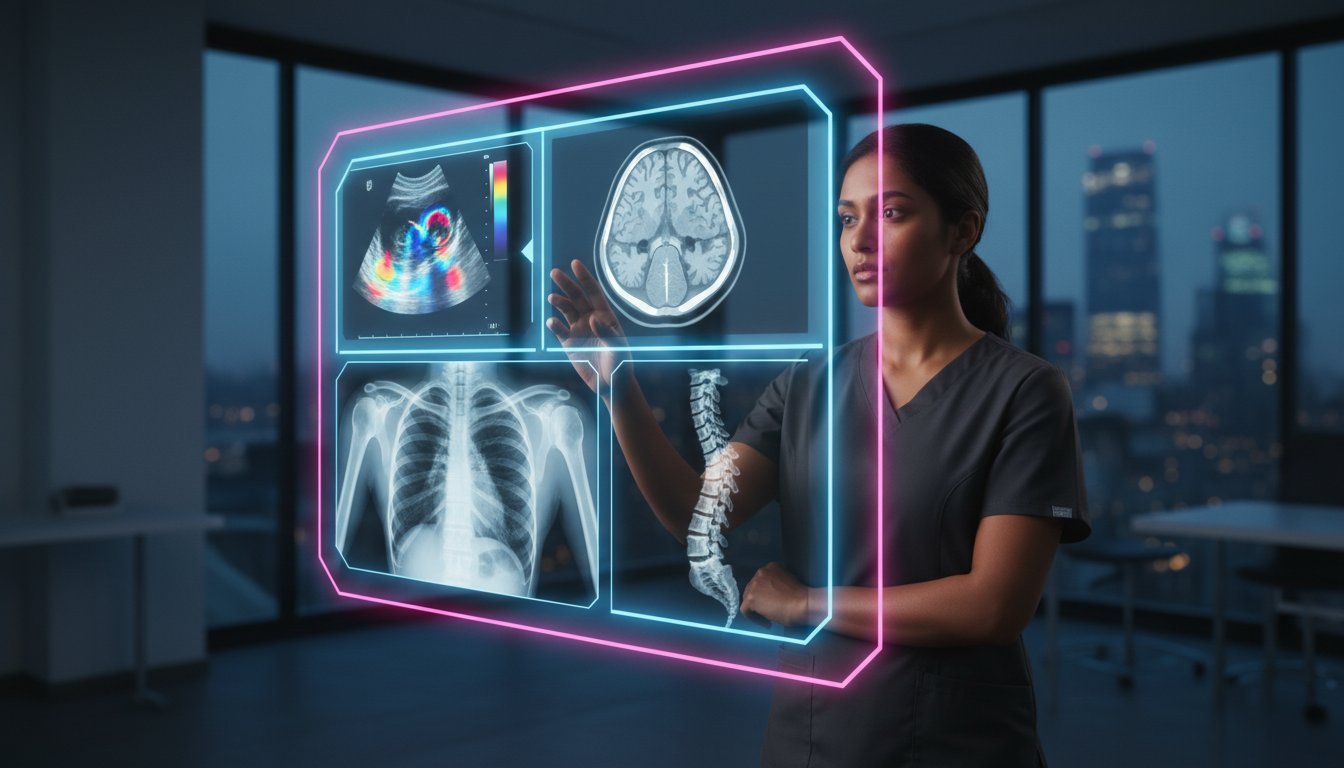
What if the most advanced imaging tool in your facility is actually the wrong choice for your patient’s specific presentation? Deciding when to utilize Ultrasonography, X ray, CT scan, MRI requires more than just following a protocol; it demands a deep understanding of clinical logic. A 2023 report from the Journal of Graduate Medical Education highlighted that 35% of clinicians struggle to explain radiation risks or justify overlapping indications for CT and MRI. We know it’s difficult to bridge the gap between textbook physics and the immediate needs of a patient in a high pressure clinical setting.
\n\n
At London HeartbeatZ Academy, our mission is empowering hearts with knowledge by providing clinically relevant education that you can use today. This guide will help you master the decision-making process for selecting and interpreting the four primary imaging modalities. You’ll learn to confidently order the correct test, understand the underlying technical mechanisms, and significantly enhance your diagnostic accuracy. We are going to explore the specific strengths and limitations of each tool to ensure your clinical practice remains both precise and evidence based.
\n\n
Key Takeaways
\n
- \n
- Move beyond diagnostic guesswork by mastering a systematic clinical framework that prioritizes precision and accuracy in every imaging request.
- Master the fundamental physics and safety considerations behind Ultrasonography, X ray, CT scan, MRI to confidently select the most appropriate tool for every diagnostic challenge.
- Learn how to assess critical patient-specific factors, such as renal function and pregnancy, to ensure clinical efficacy without compromising patient safety.
- Discover how to transition from interpreting simple 2D shadows to navigating complex 3D cross-sectional insights for more reliable bedside diagnostics.
- Empower your professional journey by bridging the gap between theoretical textbook knowledge and the high-stakes reality of modern clinical practice.
\n
\n
\n
\n
\n
\n
\n\n
\n\n
The Evolution of Diagnostic Imaging: Why Modality Selection is a Critical Clinical Skill
\n\n
Modern medicine has moved beyond the era of intuitive guesswork. Since the first clinical X-ray in 1895, the field has expanded into a sophisticated ecosystem where Ultrasonography, X ray, CT scan, and MRI form the four pillars of internal visualization. This evolution allows clinicians to confirm a diagnosis with nearly 100% certainty before ever picking up a scalpel. This Medical Imaging Overview highlights how these technologies have transformed from experimental tools into the backbone of patient safety and surgical planning.
\n\n
Choosing the wrong modality isn’t just a minor inconvenience. It leads to diagnostic delays that can extend hospital stays by an average of 2.4 days and inflate healthcare costs by thousands. A \”one-size-fits-all\” approach fails because every patient’s pathology requires a specific lens. While an X-ray might suffice for a fractured tibia, it’s useless for detecting a subtle ligament tear where an MRI is the gold standard.
\n\n
Bridging the gap between a vague clinical suspicion and a definitive diagnosis requires a deep understanding of which tool provides the highest clarity for the specific tissue involved. Clinicians must weigh factors like ionizing radiation, contrast risks, and soft-tissue resolution in seconds. Mastering this selection process is what separates a competent practitioner from a global leader in patient care.
\n\n
The Global Standard of Medical Excellence
\n
Innovation in imaging doesn’t happen in a vacuum. International medical hubs like london uk serve as the world’s testing grounds for standardized reporting and advanced protocols. These centers ensure that a scan performed in one country is interpreted with the same clinical rigor in another. In professional medical education, diagnostic yield is defined as the probability that a specific test or procedure will provide the information necessary to establish a correct diagnosis.
\n\n
Empowering Hearts with Knowledge: The Heartbeatsz Philosophy
\n
At HeartbeatZ Academy, we believe that mastering Ultrasonography, X ray, CT scan, and MRI is about more than memorizing physics. It’s about clinically relevant application. Many practitioners face \”imposter syndrome\” when ordering complex scans, fearing they’ve chosen the wrong sequence or modality. We solve this by focusing on the practical bridge between textbook theory and the bedside.
\n\n
Lifelong learning isn’t a chore; it’s a necessity in a digital-first era where imaging technology updates every 18 to 24 months. Our mission is to ensure you feel confident and authoritative every time you review a patient’s results. By providing expertly curated, accessible education, we help you transition from academic knowledge to real-world clinical excellence, ensuring every diagnostic decision you make is backed by the latest global standards.
\n\n
Ionizing Radiation Modalities: Mastering X-ray and CT Scans
\n\n
Ionizing radiation remains a foundational pillar of clinical diagnostics. At its core, the physics of X-rays relies on differential absorption. High-energy photons penetrate the body, where dense tissues like cortical bone attenuate the beam, while air-filled structures like the lungs allow photons to pass through almost unimpeded. This creates the familiar grayscale map that helps clinicians distinguish between health and pathology. When deciding between Ultrasonography, X ray, CT scan, MRI, the speed and accessibility of ionizing modalities often make them the first line of defense in acute settings.
\n\n
X-ray: The Workhorse of Primary and Urgent Care
\n
Plain film radiography is the most frequent starting point for musculoskeletal and respiratory complaints. It’s the definitive tool for identifying displaced fractures and assessing the classic abdominal radiograph for bowel gas patterns. However, 2D imaging has its limits, as overlapping structures can obscure small lesions. To master chest film interpretation, clinicians must understand the Silhouette Sign. The Silhouette Sign is a fundamental tool for chest X-ray interpretation, defined as the loss of a normal anatomical border when two structures of similar density are in direct physical contact. This allows you to localize an opacity to a specific lung lobe with remarkable accuracy.
\n\n
CT Scan: Speed, Precision, and Emergency Utility
\n
Computed Tomography represents a massive leap from 2D shadows to 3D cross-sectional insights. By rotating an X-ray source and detector around the patient, CT scanners generate \”slices\” that eliminate the summation effect of plain films. This precision is quantified through Hounsfield Units (HU), a scale where water is 0, air is -1000, and dense bone reaches +1000. These units allow for objective tissue characterization, helping you differentiate a simple cyst from a solid mass. CT remains the gold standard for identifying acute intracranial hemorrhage, where blood appears bright and hyperdense against brain parenchyma.
\n\n
In trauma and oncology, CT provides the rapid, detailed mapping required for surgical planning. When using iodinated contrast agents to enhance vascular detail, always prioritize renal safety. Current guidelines suggest screening eGFR levels for patients with known kidney disease or those over age 60 to prevent contrast-induced nephropathy. If you’re looking to bridge the gap between academic theory and real-world application, our clinically relevant courses provide the expert mentorship needed to excel.
\n\n
Managing the Radiation Objection: The ALARA Principle
\n
The primary concern for patients is often the cumulative risk of radiation. We address this through the ALARA Principle: As Low As Reasonably Achievable. This involves utilizing the lowest possible dose to obtain a diagnostic image. Clinicians should communicate that a standard chest X-ray carries a radiation dose roughly equivalent to 10 days of natural background radiation. By choosing the right modality at the right time, you ensure patient safety while maintaining diagnostic excellence. CT and X-ray aren’t just tools; they’re precise instruments that, when mastered, provide the clarity needed for life-saving decisions.
\n\n
Non-Ionizing Precision: The Power of Ultrasonography and MRI
\n\n
While an X ray or CT scan provides rapid skeletal data, Ultrasonography and MRI offer a safer, radiation-free window into soft tissue health. These modalities don’t rely on ionizing radiation, making them the preferred choice for pediatric patients and expectant mothers. The physics behind them is fascinating. Ultrasonography uses high-frequency sound waves, typically between 2 and 18 MHz, that reflect off internal structures to create images. In contrast, MRI utilizes a powerful magnetic field, often 1.5 or 3.0 Tesla, to align hydrogen protons in the body. When radiofrequency pulses disrupt this alignment, the protons release energy that the system converts into highly detailed anatomical maps.
\n\n
Choosing these tools requires an understanding of their limitations. Ultrasound is highly operator-dependent; the quality of the diagnostic data is only as good as the clinician’s hand. MRI, while incredibly detailed, faces challenges with metal contraindications. Ferromagnetic implants or certain pacemakers can be life-threatening in the magnet room. Safety screening is a non-negotiable step in the clinical workflow.
\n\n
Ultrasonography: Real-Time Insights at the Bedside
\n\n
Point-of-Care Ultrasound (POCUS) has effectively become the modern stethoscope for the 21st-century clinician. It allows for immediate, real-time visualization of the heart, lungs, and abdomen without moving the patient. It’s indispensable for guided vascular access, where it reduces complication rates by over 70% compared to landmark techniques. Beyond basic trauma assessments, specialized training is what truly unlocks this tool’s potential. For instance, an Advance Diploma in Echocardiography empowers medical professionals to move beyond basic views. It bridges the gap between general practice and advanced cardiac diagnostics, allowing for precise evaluation of valvular function and hemodynamics directly at the bedside.
\n\n
MRI: The Gold Standard for Soft Tissue and Neuroimaging
\n\n
MRI remains the undisputed leader for imaging the central nervous system and complex musculoskeletal injuries. For the non-radiologist, understanding the difference between T1 and T2 weighted images is vital. T1-weighted images show fat as bright and water as dark, which is excellent for visualizing normal anatomy. T2-weighted images show water as bright, making them the go-to for identifying edema, inflammation, or pathology. It’s the primary choice for diagnosing ACL tears or spinal cord compression where an X ray would show nothing but bone. However, clinicians must manage patient factors. Approximately 13% of patients experience claustrophobia during the scan. Clear communication and proper screening for implants are essential to ensure a successful and safe diagnostic outcome.
\n\n

\n\n
The Clinician’s Framework: How to Choose the Right Modality
\n\n
Selecting the optimal imaging path requires a structured approach to bridge the gap between clinical suspicion and definitive diagnosis. It’s not just about what’s available in the radiology department; it’s about clinical precision and patient safety. Mastering the nuances of Ultrasonography, X ray, CT scan, MRI ensures you provide the highest standard of care while avoiding unnecessary radiation or costs.
\n\n
- \n
- Step 1: Define the clinical question. A vague request leads to vague results. You must decide if you’re looking for a bony cortex break, a soft tissue tear, or a vascular occlusion.
- Step 2: Assess patient-specific factors. Age and pregnancy status are paramount. Pediatric patients require a \”Radiation as Low as Reasonably Achievable\” (ALARA) approach. Additionally, check renal function; a GFR below 30 mL/min/1.73m² often contraindicates iodinated contrast used in CT.
- Step 3: Evaluate diagnostic sensitivity vs. specificity. For acute appendicitis, CT boasts a sensitivity of nearly 94%, while Ultrasonography remains around 86% but offers a safer profile for children.
- Step 4: Consider logistics and cost. In emergency settings, a 5-minute CT scan often beats a 45-minute MRI protocol, especially when patient stability is a concern.
\n
\n
\n
\n
\n\n
Modality Comparison Matrix for Common Indications
\n\n
Practical decision-making relies on matching the pathology to the modality’s strengths. In abdominal pain, use Ultrasonography for the Right Upper Quadrant (95% sensitivity for gallstones) but pivot to CT for generalized acute pain or suspected perforation. For neurological deficits, a non-contrast CT is the gold standard for spotting acute intracranial hemorrhage within minutes. However, MRI is the superior choice for demyelinating diseases like Multiple Sclerosis or identifying chronic ischemic changes.
\n\n
- \n
- Chest Pain: Use an X-ray as a first-line screen for pneumonia or pneumothorax; escalate to a CTPA if you suspect a pulmonary embolism.
- Neurological: CT for \”worst headache of life\” (acute bleed); MRI for subacute infarcts or tumors.
- Abdominal: Ultrasonography for pelvic/obstetric issues; CT for suspected bowel obstruction.
\n
\n
\n
\n\n
Specialized Decision-Making in Primary Care
\n\n
General Practitioners often face the challenge of managing patient demands for advanced imaging. Earning a Diploma in Family Medicine empowers clinicians to make evidence-based referrals that balance clinical utility with cost-effectiveness. It’s about confidently explaining to a patient why an MRI for simple mechanical back pain isn’t clinically indicated during the first six weeks of symptoms.
\n\n
In specialized chronic care like diabetology, the role of imaging shifts toward monitoring complications. Clinicians frequently utilize Doppler Ultrasonography to assess peripheral arterial disease, a critical step in preventing diabetic foot ulcers. By integrating these tools thoughtfully, you move from simply ordering tests to providing \”clinically relevant education\” and care for your patients.
\n\n
\n\n
Bridge the Gap: Advancing Your Imaging Expertise with Heartbeatsz Academy
\n\n
Theoretical knowledge provides a necessary foundation, but modern clinical excellence demands more than just passing exams. Many clinicians find themselves overwhelmed when translating a textbook description into a real-world diagnostic decision. Heartbeatsz Academy addresses this specific need by offering expert-led, clinically relevant training that moves beyond the basics. We help you master the nuances of Ultrasonography, X ray, CT scan, MRI, and other vital tools to ensure you provide the highest standard of patient care. Our mission focuses on empowering hearts with knowledge, transforming how you approach every patient encounter.
\n\n
The Heartbeatsz approach is built on three pillars: global accessibility, academic rigor, and practical application. We understand that a clinician in a high-pressure emergency department needs different insights than one in a specialized cardiac suite. By bridging the gap between theory and the bedside, we’ve built a global community of 42,000+ medical professionals who are committed to lifelong learning and clinical precision.
\n\n
Mastering the Art of Image Interpretation
\n\n
The transition from looking at pictures to analyzing clinical data is a pivotal step in your professional growth. It’s the difference between identifying a shadow and diagnosing a life-threatening condition. Our Diploma in Cardiology deepens your understanding of cardiac imaging, teaching you to spot subtle pathologies that others might miss. You’ll learn to integrate complex findings into a broader diagnostic framework that prioritizes patient safety. Clinical correlation is always required for any imaging finding. This mindset ensures that Ultrasonography, X ray, CT scan, MRI results are never viewed in isolation but as part of a complete patient story. For cardiac patients where imaging reveals arrhythmogenic pathways, understanding what is an ablation and how targeted energy-based therapy can address the underlying electrophysiological substrate is an essential component of comprehensive patient management.
\n\n
Your Pathway to Career Advancement
\n\n
Specialization is no longer a luxury; it’s a necessity in a competitive global market. Clinicians who hold specialized diplomas often see a significant return on investment through enhanced diagnostic confidence and expanded career opportunities. Our programs in Cardiology and Emergency Medicine are designed for the busy healthcare professional, offering flexible, anytime-anywhere learning that fits your schedule. You don’t have to sacrifice your practice to advance your education. We provide the tools you need to stay ahead of technological shifts and evolving diagnostic protocols.
\n\n
- \n
- Join 42,000+ peers in a supportive, expert-led environment.
- Access curriculum curated by seasoned cardiologists and emergency specialists.
- Gain the credentials needed to lead in modern healthcare settings.
\n
\n
\n
\n\n
Your journey toward becoming a diagnostic expert starts with a single step toward specialized education. We invite you to join our growing family of learners who are redefining what it means to be a clinician. Explore our comprehensive healthcare diplomas and start your journey today.
\n\n
Elevate Your Diagnostic Precision Today
\n\n
Mastering the nuances of Ultrasonography, X ray, CT scan, MRI is a fundamental skill that separates proficient clinicians from true diagnostic experts. You’ve explored how to balance the speed of ionizing modalities with the detailed soft-tissue resolution of non-ionizing techniques. Every clinical decision you make impacts patient outcomes, so it’s essential to bridge the gap between textbook theory and practical application. Relying on outdated knowledge isn’t an option in a field that evolves as rapidly as medical imaging.
\n\n
We’re here to support your professional growth with resources that matter. Heartbeatsz Academy features over 200 expertly curated medical courses led by board-certified specialists and seasoned clinicians who understand the daily challenges you face. You’ll be part of a global community of 42,000+ learners who trust our mission of empowering hearts with knowledge. It’s time to take the next step in your professional journey and sharpen your clinical edge.
\n\n
Empower your medical career with an Advanced Diploma from Heartbeatsz Academy
\n\n
Your commitment to excellence is the heartbeat of better healthcare, and we’re excited to help you reach your full potential.
\n\n
Frequently Asked Questions
\n\n
What is the primary difference between a CT scan and an MRI for soft tissue?
\n
An MRI provides significantly higher soft tissue contrast than a CT scan because it uses powerful magnetic fields rather than ionizing radiation. While a CT scan is often the preferred choice for acute trauma or bone fractures due to its speed, MRI is the gold standard for visualizing ligaments, tendons, and neurological structures. Clinicians typically choose MRI when they need to distinguish between different types of soft tissues with high precision.
\n\n
Is Ultrasonography as accurate as a CT scan for abdominal radiographs?
\n
Ultrasonography isn’t generally as accurate as a CT scan for evaluating complex abdominal pathology like bowel perforations or retroperitoneal masses. A meta-analysis published in the journal Radiology showed that CT has a sensitivity of 94% for detecting appendicitis, while ultrasound averages around 86%. Ultrasound remains the primary choice for gallbladder disease and pelvic imaging because it’s portable and doesn’t involve radiation.
\n\n
What are the main contraindications for a patient undergoing an MRI?
\n
The most critical contraindications for an MRI include non-compatible metallic implants like older pacemakers, cochlear implants, or metallic fragments in the eye. Since 2011, many MRI-conditional devices have entered the market, but clinicians must verify every implant’s safety profile before the procedure. Severe claustrophobia or a high body mass index exceeding the table’s weight limit of 450 pounds are also practical barriers to successful imaging.
\n\n
How much radiation exposure is involved in a standard chest X-ray?
\n
A standard two-view chest X ray delivers approximately 0.1 mSv of radiation, which is roughly equivalent to 10 days of natural background radiation exposure. This is a remarkably low dose compared to a chest CT scan, which can deliver 7.0 mSv or the equivalent of 2 years of background radiation. Clinicians prioritize X-rays for initial screenings to keep the patient’s cumulative radiation dose as low as reasonably achievable.
\n\n
Can a pregnant patient safely undergo diagnostic imaging?
\n
Pregnant patients can safely undergo most diagnostic imaging, though clinicians prioritize non-ionizing modalities like Ultrasonography and MRI. The American College of Obstetricians and Gynecologists states that a single diagnostic X-ray exposure doesn’t result in harmful fetal effects. If a CT scan is clinically necessary for a life-threatening condition like a pulmonary embolism, the benefits often outweigh the minimal risks of fetal radiation exposure.
\n\n
When should a clinician choose an X-ray over a CT scan for bone injuries?
\n
Clinicians should choose an X-ray as the first-line diagnostic tool for suspected simple fractures or obvious dislocations in long bones. It’s faster, more affordable, and provides sufficient detail for most orthopedic emergencies. If the X-ray results are inconclusive or if the injury involves complex intra-articular surfaces like the tibial plateau, a CT scan is then utilized to provide 3D reconstruction for surgical planning.
\n\n
What does \”contrast-enhanced\” mean in the context of CT and MRI?
\n
Contrast-enhanced refers to the administration of specialized dyes, like iodine for CT or gadolinium for MRI, to increase the visibility of internal structures. These agents highlight blood vessels and areas of inflammation, helping clinicians identify tumors or vascular abnormalities that would otherwise remain invisible. It’s a standard technique used in 40% of all CT scans to improve diagnostic accuracy and bridge the gap between vague symptoms and a clear diagnosis.
\n\n
How does an Echocardiogram differ from standard abdominal Ultrasonography?
\n
An Echocardiogram uses high-frequency sound waves specifically optimized to capture the heart’s rapid movement and blood flow dynamics in real-time. While both use the same underlying technology, abdominal ultrasound uses lower frequencies to penetrate deeper into solid organs like the liver and kidneys. This specialized cardiac imaging is essential for measuring the ejection fraction and assessing valvular function, providing the clinically relevant data needed for heart failure management.
“,
“name”: “cloud_browser_execute_js”
}
Turn this knowledge into a clinical skill
Reading about medical imaging is the first step. Structured, guided training is what makes it stick. These London HeartbeatZ Academy courses take this guide further:
- Doctor Core Skills for UKMLA and USMLE – ECG, blood gases, BLS and X-ray interpretation, built for exam and ward confidence.
- Practical Nursing Skills: ECG, Blood Gases, IV Therapy and Life Support – hands-on clinical skills for ward-ready practice.
Ready to master medical imaging for real?
Join Doctor Core Skills for UKMLA and USMLE at London HeartbeatZ Academy. Membership starts from £9/month and unlocks 200+ courses.